Transformers are used in a variety of industries to facilitate the transfer of power from a source to the point of consumption. Perhaps more than in any other industry, transformers are widely employed in the electric utility industry to disperse and transfer electricity in large-scale power grids. Transformers are also considered oil-filled equipment since they utilize oil to insulate and cool internal components.
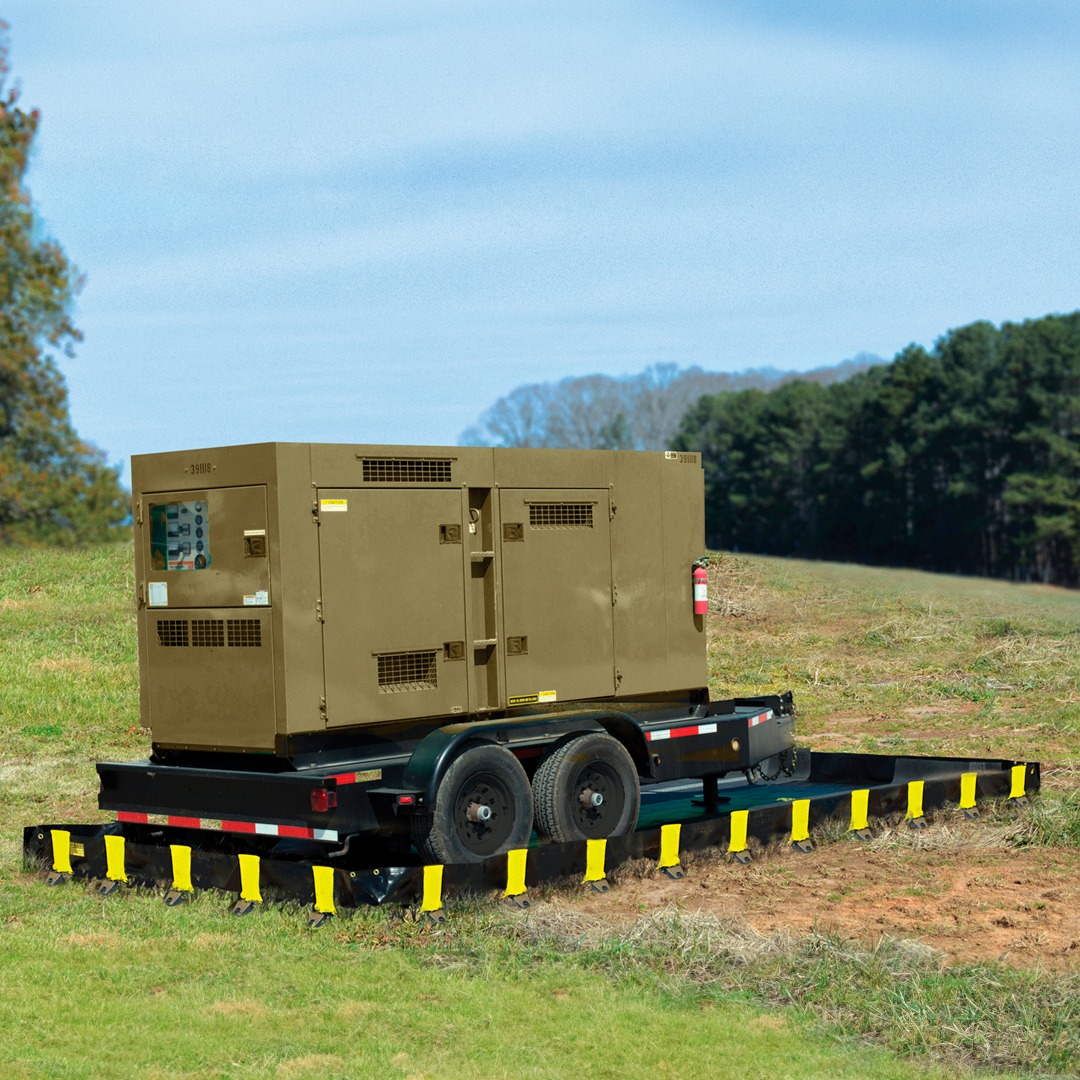
A variety of industries often require generators to supply emergency power in the event of a power outage. Generators typically utilize fuel liquids—such as diesel, gasoline or oil—to supply power. These liquids can have a deleterious impact on the environment if not properly contained. A secondary containment unit is designed to safely contain leaks and spills that occur during generator usage.
The applications for collapsible berms are endless. They prevent oil and grease from leaving a vehicle wash down. Emergency services decontaminate response personnel in decon berms. Laboratories use berms to store hazardous chemicals. Industrial warehouses set up storage locations using collapsible berms.
An electric utility in metropolitan New York City utilizes concrete secondary containment moats in substations throughout its vast network. Following storms with heavy rain fall, the moats filled with large volumes of water. This water needed to be evacuated. Strict SPCC guidelines and state and city regulations require discharged water to be completely free of hydrocarbon contamination.
Secondary oil containment around transformers is critical for capturing oil spills and protecting the environment. SPCC regulations provide guidance for containing oil-filled equipment. The rule specifies sizing oil containment systems to contain the contents of the largest vessel - or in this case, the transformer inside the containment area. Add 10 percent to the volume of oil to accommodate precipitation or snow.
SPCC plans cover general containment of the entire facility, including specific measures taken for individual pieces of oil filled equipment. The regulations provide numerous alternatives and methods for secondary oil containment.
By the end of 2018, the total installed capacity of wind power in the United States reached more than 96,000 MW. Wind power is now a major segment of the sustainable power sector with the ability to supply the needs of 24 million homes.
Currently, there are more than 56,000 utility scale wind turbines operating in the US. Each wind turbine connects to its own step-up transformer. From there, power transfers to the grid through an additional step-up transformer called a "collector" in a substation. Generally small in MVA rating, wind turbine step-up transformers are in the base of the turbine itself.
The United States solar industry is booming. According to the Solar Energy Industry Association, it boasts an annual average growth rate of 59 percent over the last decade. Utility scale projects accounted for 59 percent of new solar installations in 2017, and should continue at that rate or higher through 2021. Like wind, water and other renewable energy sources, solar energy relies on transformers to connect to the power grid.
Oil solidifiers, like BCI’s Oil Solidifying Polymers (formerly known as C.I.Agent), are composed of dry, high molecular weight polymers that have a porous matrix and large oleophilic (strong affinity for oil rather than water) surface area. Upon contact with oil, the oil solidifiers form a physical bond with the oil.
An Illinois utility used the EVAC Filtration System to assist in the dewatering of vaults and manholes in the City of Chicago and surrounding suburbs. The EVAC System uses state-of-the-art filtration technology to remove suspended solids and light sheen from water discharge operations.