Secondary Containment Calculator for Spill Berm Capacity
- By Dan Carver
- Sep 10, 2025

Inadequate spill containment can lead to costly fines, environmental damage, and safety hazards. Determining the correct spill berm capacity is essential for mitigating these risks. Achieving the correct containment capacity demands precise spill containment calculation to ensure your operations are both safe and compliant.
The Importance of SPCC Regulations for Secondary Containment
Secondary containment requirements are regulated by Spill Prevention Control and Countermeasures (SPCC) rules. SPCC applies to facilities with a total aboveground oil storage capacity of greater than 1,320 U.S. gallons or 42,000 U.S. gallons of buried storage capacity. When making a site capacity assessment, include every container of 55 U.S. gallons or more.
All types of hydrocarbon-based oils are subject to SPCC regulations. This includes petroleum, fuel oil, sludge, oil refuse, fats, animal and vegetable oils, synthetic and mineral oils. Industries covered by SPCC include on and offshore drilling platforms, oil derricks and oil rigs, oil refineries, railroad cars and truck oil tankers and their loading areas, oil pipelines, and some waste treatment facilities. However, SPCC excludes transportation-related facilities.
The regulations specify that secondary containment must have the capacity to capture the full contents of the largest vessel in the containment area, plus a freeboard volume to account for any precipitation during a spill. Freeboard of approximately 10 percent is usually adequate.
What is a Secondary Containment Calculator?
A secondary containment calculator is a specialized tool designed to help you determine the approximate volume capacity required for secondary containment systems like spill berms. This provides an estimate of the containment capacity based on the dimensions of your desired containment area, as well as the volume of your primary containment.
How a Secondary Containment Calculator Works
Calculating a spill containment berm size for your application is simple. A containment calculator typically follows these steps:
- List Containers: The calculator first needs to know all the containers that will be in the secondary containment area.
- Find Largest Volume + Freeboard: It then identifies the largest single container from your list and adds 10 percent for rain (freeboard volume). This gives the total volume needed.
- Convert to Cubic Feet: The calculator converts this total volume from gallons into cubic feet. (It uses the formula: cubic feet = gallons / 7.48).
- Calculate Required Area: Using your chosen berm wall height, the calculator figures out the ground area needed for the containment. (It uses the formula: area = volume / height).
- Determine Length and Width: From the required area, the calculator helps you find a length and breadth that will fit your available space.
- Provide Calculated Berm Needs: Finally, the calculator provides the specific measurements and volume requirements needed for your berm. Select a standard berm that fits those calculated needs.
Applying the Containment Calculation Method: A Case Study
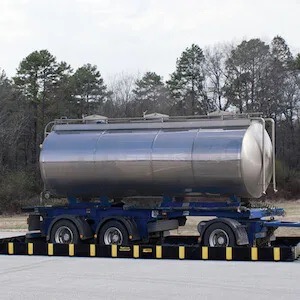
Here, we demonstrate how to apply the principles of a secondary containment calculator to a real-world scenario: An oil refinery has a loading area for trucks to pick up products for delivery. The area requires secondary containment large enough to capture the entire contents of the truck in the case of a spill. Let’s calculate the correct spill containment berm size by following the steps above:
- While a number of different trucks use this loading area, the maximum truck size is a 5,000 gallon tanker.
- Adding the 10 percent freeboard volume results in a total secondary containment volume of 5,500 U.S. gallons.
- Convert the volume to cubic feet: 5,500 / 7.48 = 735.29 cubic feet.
- Assuming we want a standard berm wall height of 1 foot, calculate the required area: 735.29 / 1 = 735.29 square feet.
- A 5,000 gallon tanker has a width of approximately 10 feet. Select a berm width of 14 feet for to accommodate a leaking tanker. Calculate the minimum length required: 735.29 / 14 = 52.52 feet.
- A quick glance at the standard berm sizes on the BCI website leads to the selection of a 14 feet x 54 feet x 1 foot Rigid-Lock Fail-Safe QuickBerm® for this loading area.
If you’re in a hurry and need to know what size berm to use with tankers of different capacities, check out our QuickBerm Comparison Chart. It details the recommended Rigid-Lock Fail-Safe® QuickBerm sizes for commonly sized tanker trucks.
Spill Containment Berms: Customized Solutions
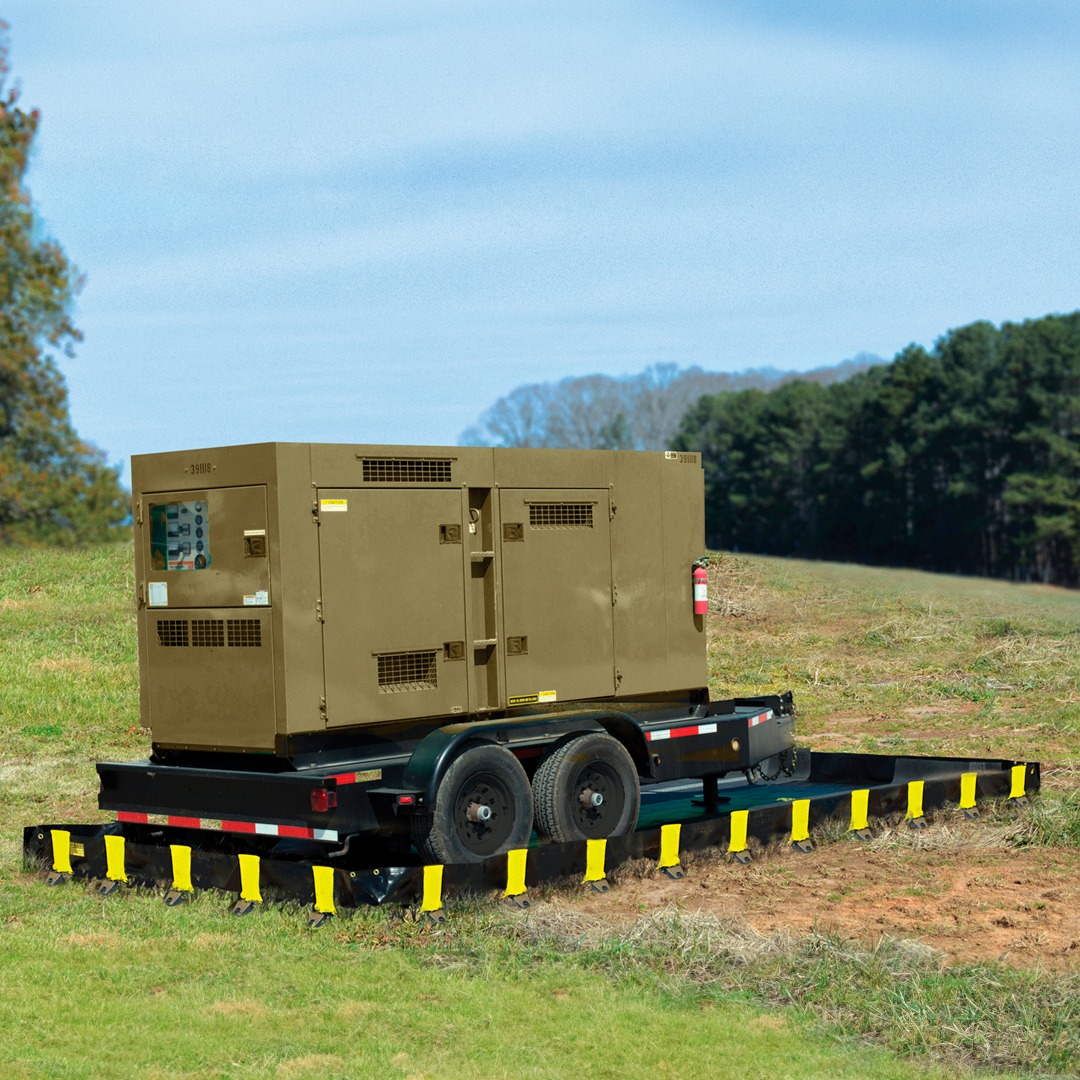
A containment calculator provides an estimated capacity to help you understand your general needs. However, we recognize that standard spill containment berms may not always be the ideal solution for oddly shaped rooms or certain applications. BCI offers customized berm solutions to fit your exact specifications. Custom berms range from small berms for hard-to-reach spill control to extremely large spill berms for military applications.
Order Spill Containment Berms from BCI Today
BCI offers technical support for your secondary containment requirements. Now that you have a better understanding of spill containment calculation, browse our selection of suitable berms for spill containment and customize our products to fit your needs. Contact us today for more information.
References
- Environmental Protection Agency. Oil Spills Prevention and Preparedness Regulations
- EHS Daily Advisor. What Confuses Everyone About Secondary Containment
Secondary containment requirements are regulated by Spill Prevention Control and Countermeasures (SPCC) rules. SPCC applies to facilities with a total aboveground oil storage capacity of greater than 1,320 U.S. gallons or 42,000 U.S. gallons of buried storage capacity. When making a site capacity assessment, include every container of 55 U.S. gallons or more.
All types of hydrocarbon-based oils are subject to SPCC regulations. This includes petroleum, fuel oil, sludge, oil refuse, fats, animal and vegetable oils, synthetic and mineral oils. Industries covered by SPCC include on and offshore drilling platforms, oil derricks and oil rigs, oil refineries, railroad car and truck oil tankers and their loading areas, oil pipelines and some waste treatment facilities. However, SPCC excludes transportation related facilities.
The regulations specify that secondary containment must have the capacity to capture the full contents of the largest vessel in the containment area, plus a freeboard volume to account for any precipitation during a spill. Freeboard of approximately 10 percent is usually adequate.
Spill Containment Berms: How to Calculate Volume
Calculating a spill containment berm size for your application is simple. Just follow these 6 steps:
- List the containers that will be in the secondary containment area.
- Determine the volume of the largest single container in the list - then add 10 percent freeboard volume.
- Convert the gallon volume into cubic feet units. (cubic feet = gallons / 7.48)
- Use the berm wall height to convert your volume measurement into an area required. (area = volume / height)
- Calculate a length and breadth that fits into the available workspace.
- Select a standard berm that meets your calculated needs.
Spill Containment Berms: A Case Study
An oil refinery has a loading area for trucks to pick up products for delivery. The area requires secondary containment large enough to capture the entire contents of the truck in the case of a spill. Let’s calculate the correct spill containment berm size by following the steps above:
- While a number of different trucks use this loading area, the maximum truck size is a 5,000 gallon tanker.
- Adding the 10 percent freeboard volume results in a total secondary containment volume of 5,500 U.S. gallons.
- Convert the volume to cubic feet: 5,500 / 7.48 = 735.29 cubic feet.
- Assuming we want a standard berm wall height of 1 foot, calculate the required area: 735.29 / 1 = 735.29 square feet.
- A 5,000 gallon tanker has a width of approximately 10 feet. Select a berm width of 14 feet for to accommodate a leaking tanker. Calculate the minimum length required: 735.29 / 14 = 52.52 feet.
- A quick glance at the standard berm sizes on the BCI website leads to the selection of a 14 feet x 54 feet x 1 foot Rigid-Lock Fail-Safe QuickBerm® for this loading area.
If you’re in a hurry and need to know what size berm to use with tankers of different capacities, check out our QuickBerm Comparison Chart. It details the recommended Rigid-Lock Fail-Safe® QuickBerm sizes for commonly sized tanker trucks.
Spill Containment Berms: Customized Solutions
Sometimes, spill containment berms just don't fit into the required secondary containment areas, due to oddly shaped rooms or applications. BCI offers customized berm solutions to fit your exact specifications. Custom berms range from small berms for hard-to-reach spill control, to extremely large spill berms for military applications.
Order Spill Containment Berms from BCI Today
BCI offers technical support for your secondary containment requirements. We supply a comprehensive range of collapsible berms for spill containment and customize our products to fit your needs. Contact us today for more information.
References
- Environmental Protection Agency. Oil Spills Prevention and Preparedness Regulations
- EHS Daily Advisor. What Confuses Everyone About Secondary Containment